
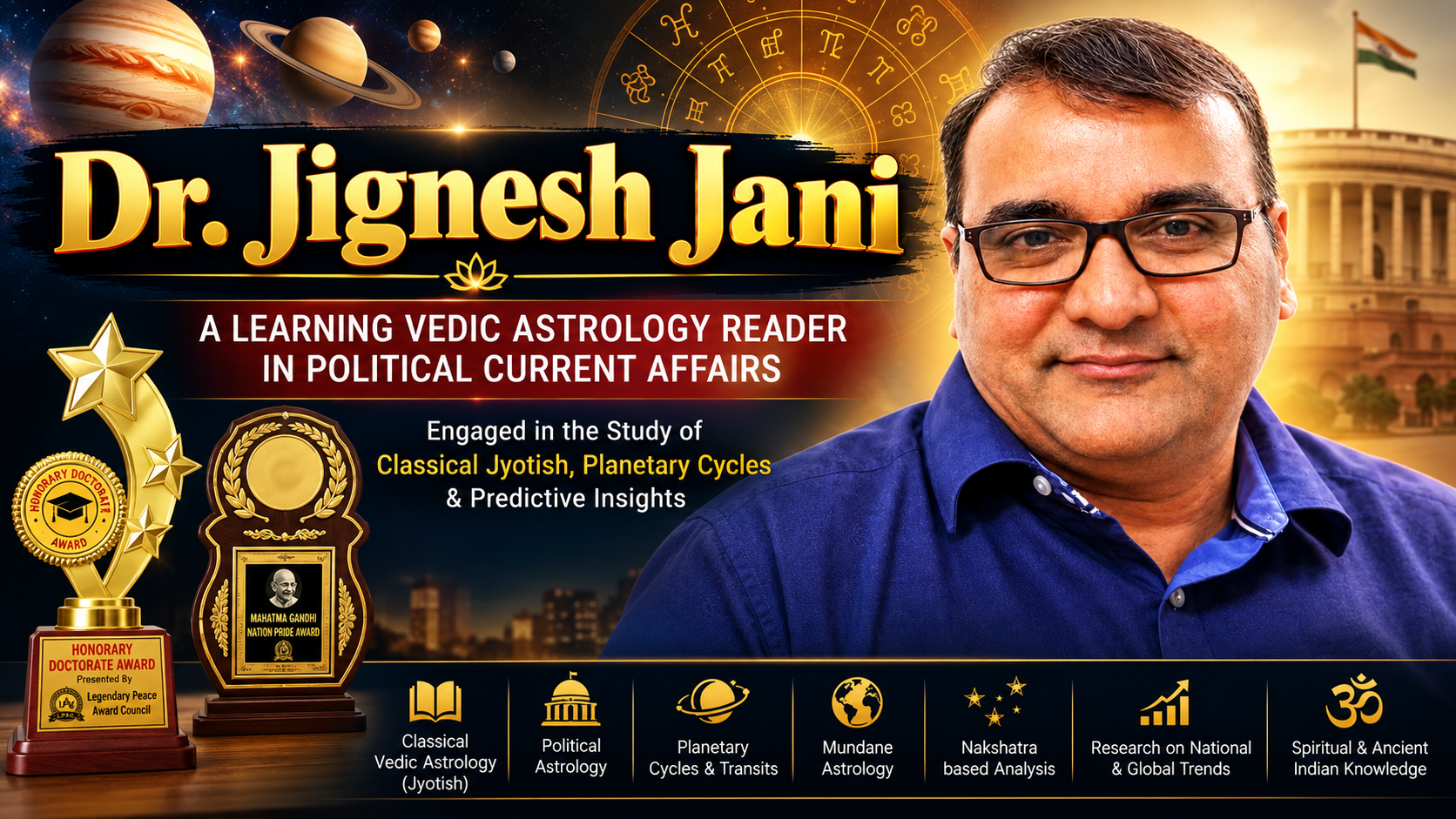
Ahmedabad | July 10, 2026: Vedic astrology researcher Jignesh Jani has shared his views on how traditional Jyotish offers a symbolic perspective on international affairs and global developments. According to Jani, Vedic astrology has historically been used to study broader cycles affecting societies and nations, providing philosophical insights rather than scientifically established predictions.
Speaking about the current global environment, Jani explained that many astrologers interpret the existing planetary alignments as representing a period of heightened geopolitical activity, economic uncertainty, and diplomatic challenges. He noted that these interpretations are rooted in classical astrological principles that have been studied for generations.
Jani referred to the present Mars–Rahu conjunction, traditionally known as Angarak Yoga, which is commonly associated in Vedic astrology with assertive energy, strategic planning, military preparedness, and intense political developments. He also discussed the Saturn–Neptune alignment, which many practitioners interpret as symbolizing institutional reforms, ideological changes, and shifts in global power structures.
While these symbolic interpretations attract interest among astrology enthusiasts, Jani stressed that they should not be mistaken for factual forecasts of wars, diplomatic decisions, or international conflicts. Instead, he said they provide a framework for reflecting on broader trends and collective human experiences.
According to Jani, Jupiter plays an important role in balancing these influences. In Vedic astrology, Jupiter is associated with wisdom, ethics, justice, and diplomacy. Many astrologers believe its symbolic influence encourages negotiation, responsible governance, and peaceful dialogue during periods of uncertainty.
“Astrology is a traditional system of symbolic interpretation, not a scientifically verified method of predicting geopolitical events,” Jani said. “The direction of world affairs ultimately depends on the choices made by governments, policymakers, and international institutions.”
Jani further encouraged readers to distinguish between traditional astrological beliefs and evidence-based geopolitical analysis. He emphasized that informed leadership, international cooperation, and diplomatic engagement remain the strongest foundations for achieving lasting peace and global stability.
Concluding his remarks, Jani expressed hope that ongoing dialogue among nations will help address emerging challenges while promoting mutual understanding, economic cooperation, and peaceful resolutions in an increasingly interconnected world.