
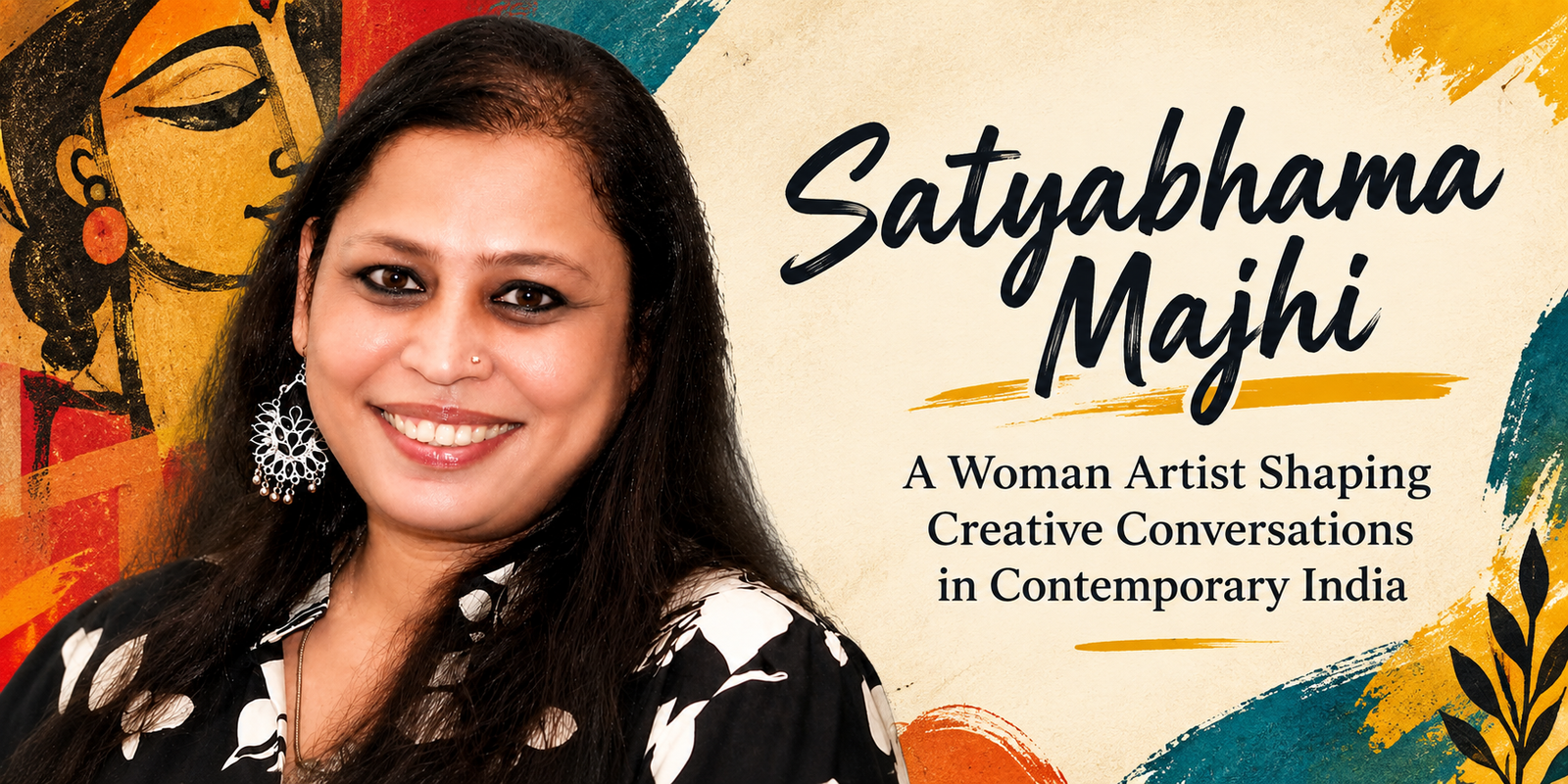
Contemporary art increasingly allows artists to move beyond the boundaries of a single medium. A painting may lead to an installation, a photographic observation may inspire a mixed-media work, and an idea developed in the studio may eventually become a public-art intervention. For Indian contemporary artist Satyabhama Majhi, this freedom to work across mediums has become an important characteristic of her artistic practice.
Based in Bhubaneswar, Odisha, Majhi has built a multidisciplinary career involving painting, sculpture, installation art, photography, mixed media, public art and community-based artistic practice. Her choice of medium often corresponds with the subject, environment and experience she wants to explore.
Rather than defining herself through one fixed technique, she has developed a broader visual vocabulary that allows different forms of contemporary expression to coexist.
Beyond a Single Medium
Traditional artistic careers were often associated with a particular medium. A painter painted, a sculptor worked primarily with three-dimensional forms, and a photographer concentrated on photographic images.
Contemporary art has increasingly challenged these boundaries.
Majhi’s career reflects this changing environment. Her practice moves between two-dimensional and three-dimensional forms, studio-based work and public projects, individual creation and community participation.
This flexibility gives her the opportunity to approach complex subjects from different directions.
A subject such as cultural memory, for example, can be explored through painting, photography or installation. A question about public space may be more effectively addressed through a mural or site-specific intervention.
The medium becomes part of the artistic thinking.
Painting as a Foundation
Painting remains an important part of Majhi’s artistic identity.
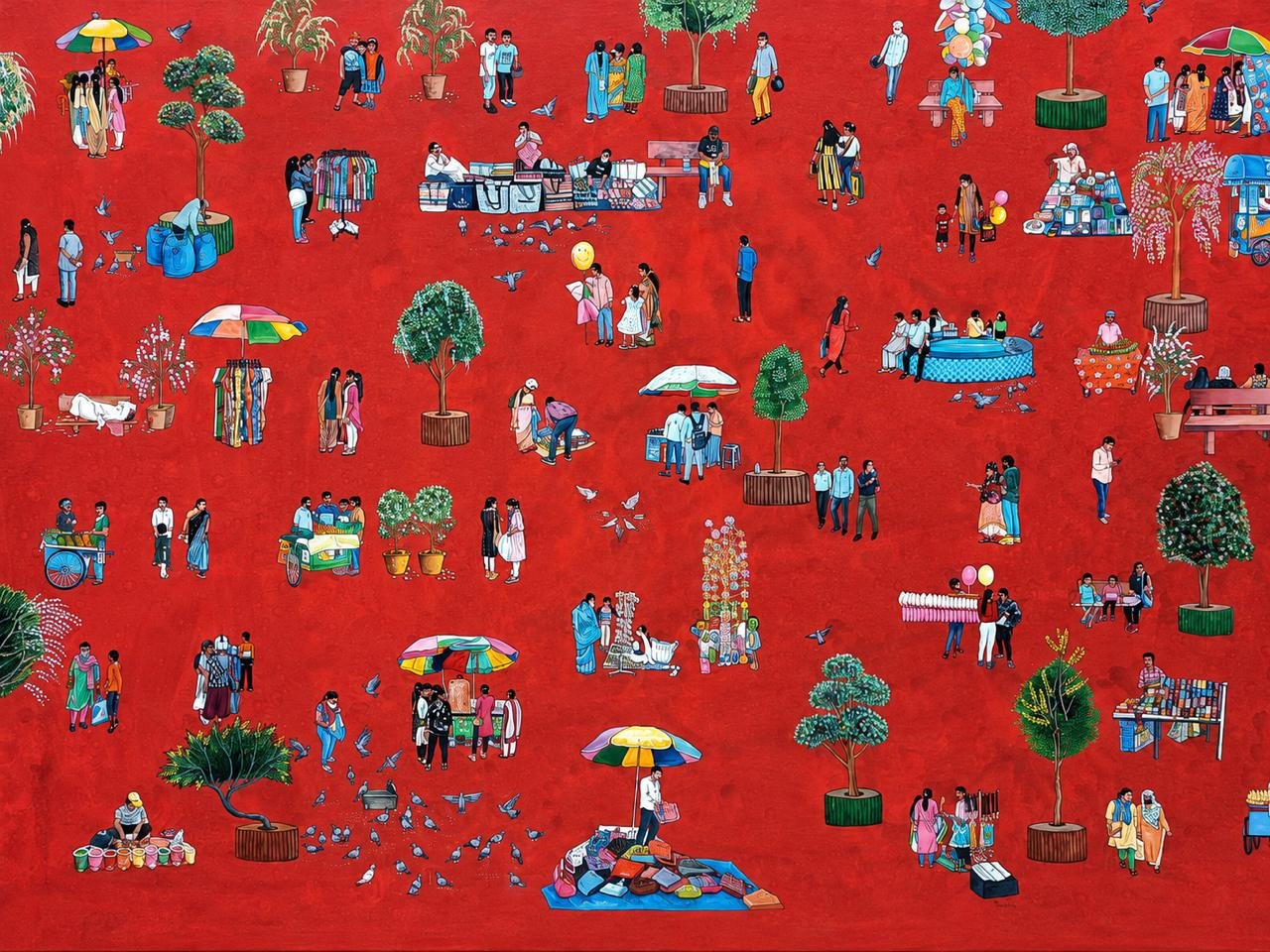
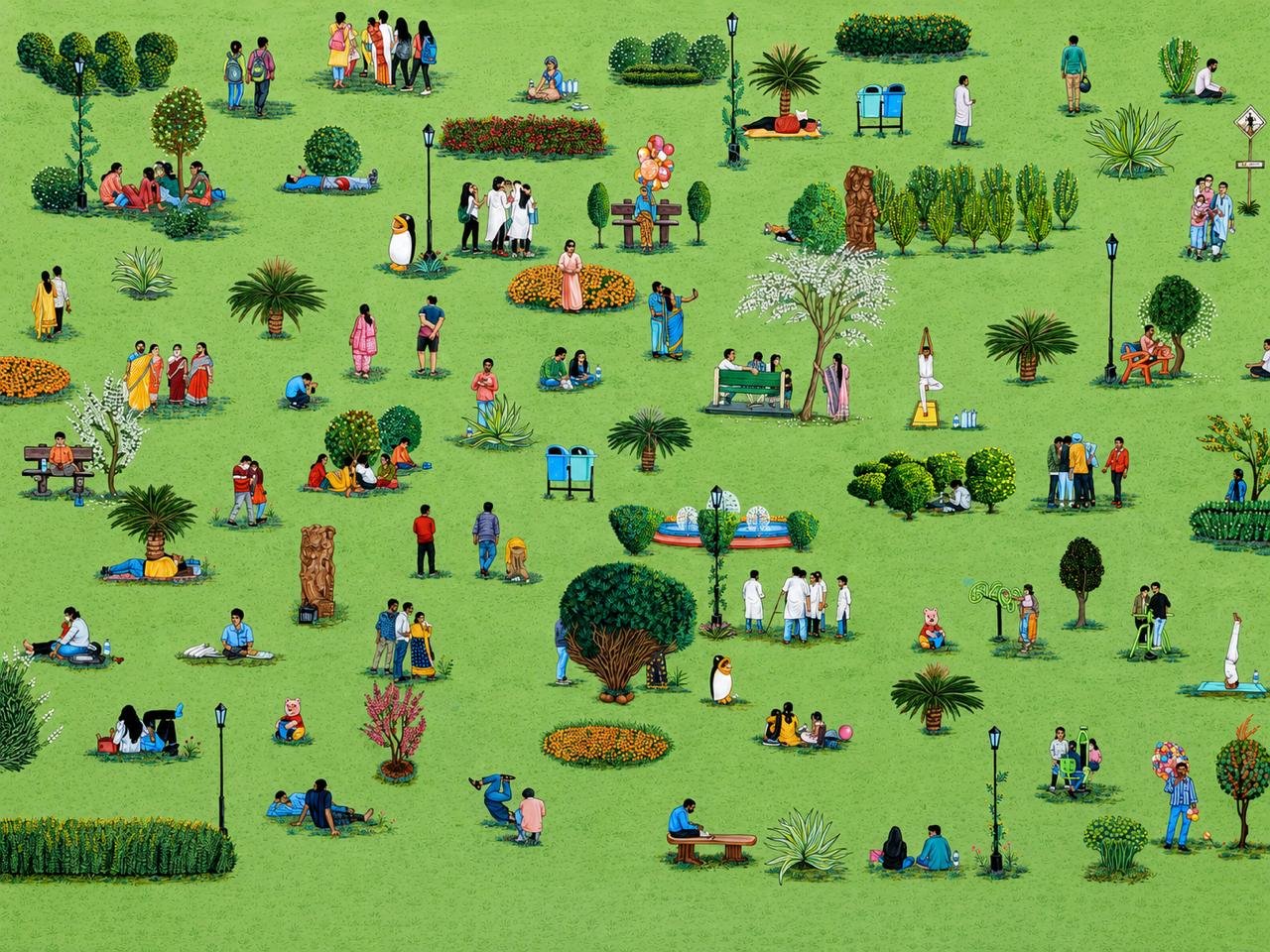
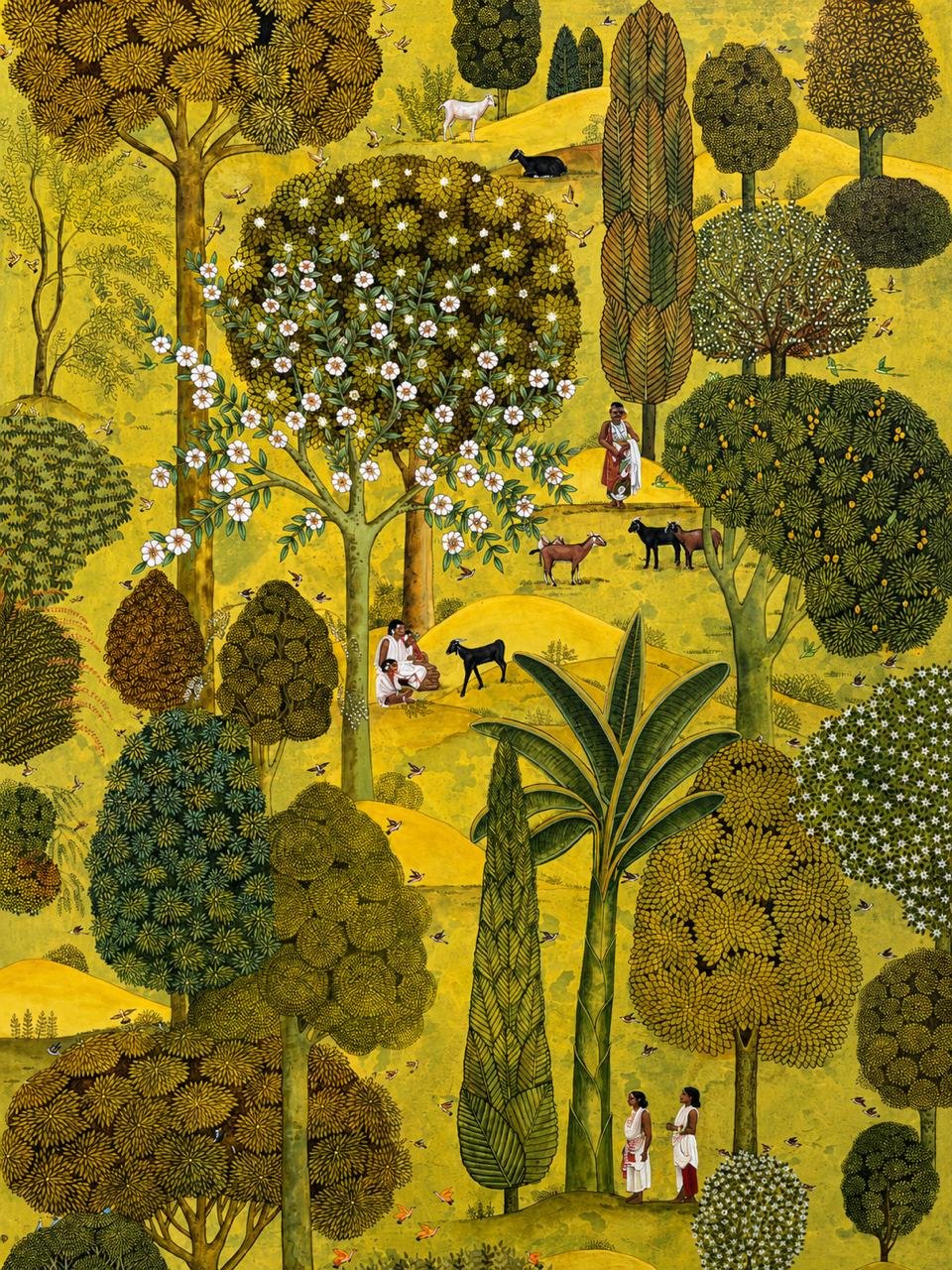
Her paintings have explored urban life, people, landscapes, cultural memory and changing environments. Through colour, composition, figures and visual forms, painting provides a direct way to communicate observations and experiences.
Her approach to painting also reflects her interest in narrative.
Rather than relying solely on abstract forms, her visual language can incorporate recognizable elements from everyday life, nature and cultural environments. These elements can be reorganised to create compositions that combine observation with interpretation.
Painting therefore becomes both a record of experience and a means of transforming that experience.
Sculpture and Three-Dimensional Thinking
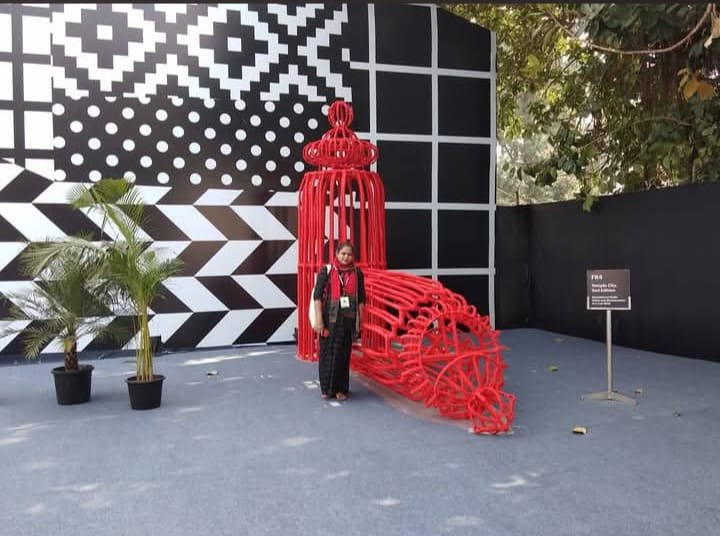
Sculpture introduces a different relationship between artwork, space and viewer.
Unlike a conventional painting, a sculpture occupies physical space and can be approached from different directions. The viewer experiences its volume, material and physical presence.
Majhi’s multidisciplinary practice includes sculpture, allowing her artistic concerns to extend into three-dimensional forms.
This becomes particularly relevant when considering her interest in place and environment. A three-dimensional artwork can interact directly with its surroundings, creating relationships between object, architecture and viewer.
Such possibilities are also important for an artist whose practice includes public and community-oriented projects.
Installation as an Experience
Installation art expands this relationship even further.
An installation can transform an entire area rather than presenting a single independent object. Space becomes part of the artwork.
For Majhi, installation provides another method for exploring ideas connected with people, environment, memory and cultural experience.
The viewer may not simply stand in front of an installation. Instead, they can experience the artwork through movement and physical presence.
This approach reflects one of the broader characteristics of contemporary art: the artwork can become an environment rather than simply an object.
Photography and the Act of Observation
Photography has another important relationship with Majhi’s artistic approach because observation is central to her practice.
Photography allows an artist to pay close attention to particular moments, people, environments and details. It can preserve aspects of a place that might otherwise disappear through time.
Majhi’s interest in urban environments, communities and cultural landscapes makes photography a useful medium for examining these subjects.
However, photography within a multidisciplinary practice does not necessarily function only as documentation. It can also become a creative medium in its own right, allowing composition, framing, perspective and context to shape the viewer’s understanding.
Mixed Media and Experimentation
Mixed-media practice creates opportunities to combine different materials and visual languages.
Majhi’s interest in natural pigments and materials adds another dimension to this experimentation. Materials such as chalk stone, charcoal, turmeric, geru soil and brown stone have been explored as sources of pigment.
When different materials are combined, the physical character of an artwork can become an important part of its meaning.
Texture, surface and material can communicate ideas about landscape and environment while also creating a distinctive visual experience.
Mixed media therefore allows Majhi to bring together elements that might otherwise remain separate.
Public Art at a Different Scale
Public art changes the scale of artistic communication.
A work created for a gallery may be experienced by a relatively defined audience. A public artwork can reach people as part of their everyday environment.
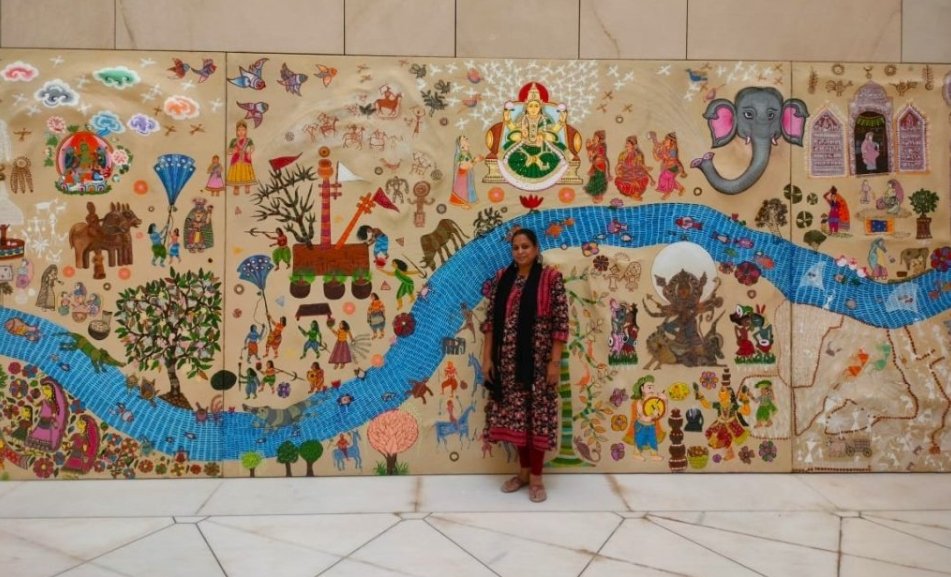
Majhi has participated in large-scale murals and public-art initiatives in Odisha, including projects associated with public spaces and major sporting events.
Working at this scale requires an artist to think about architecture, distance, visibility and the movement of people.
The artwork has to function within an environment rather than being isolated from it.
This creates an entirely different artistic challenge.
Community-Based Art and Participation
Perhaps the most significant expansion of Majhi’s multidisciplinary practice occurs when communities become part of the creative process.
Community-based art introduces participation, dialogue and shared experience.
Majhi has worked with children, schools, rural communities, tribal communities, urban neighbourhoods, artists and artisans. These engagements have influenced her understanding of art as a social process.
In such situations, the artist may not be the only source of creative knowledge. Participants can bring their own memories, cultural practices, experiences and visual ideas.
The resulting work can therefore become a collective expression rather than an exclusively individual statement.
One Idea, Many Forms
The strength of a multidisciplinary practice lies in the ability to approach one idea through multiple forms.
Consider the theme of landscape.
A painting can represent its visual appearance. A photograph can capture a particular moment within it. Sculpture can interpret its physical qualities. Installation can recreate an experience of space. Public art can place the idea directly within an urban environment.
Majhi’s artistic practice allows these possibilities to remain open.
The same is true of cultural memory. It can be expressed through images, materials, symbols, community stories or public interventions.
The medium becomes a tool for discovering different aspects of the subject.
Connecting Traditional and Contemporary Approaches
Majhi’s M.F.A. in Traditional Art provides an important foundation for understanding her contemporary multidisciplinary practice.
Her career demonstrates that traditional artistic knowledge does not have to remain restricted to traditional formats.
Knowledge of materials, forms, motifs and cultural traditions can be reinterpreted through contemporary mediums.
Her exploration of indigenous visual traditions and natural materials illustrates this approach.
Traditional knowledge can inform the concept, while contemporary art provides new methods of presentation.
This creates a dialogue between continuity and experimentation.
The Importance of Context
Another advantage of multidisciplinary art is its ability to respond to context.
A gallery, a public wall, a school, a community space and an outdoor environment all require different artistic approaches.
Majhi’s experience across multiple forms allows her to work within these different situations.
This is especially relevant to her community and public-art projects, where the location and audience are not secondary considerations. They are part of the creative environment.
An artwork made for a public space must communicate differently from one created for a gallery.
The ability to adapt without losing conceptual direction is therefore an important part of multidisciplinary practice.
Creating Connections Between Art Forms
Majhi’s work demonstrates that different mediums do not necessarily have to remain separate.
Painting can influence public art. Photography can inform observation. Natural materials can influence mixed-media experimentation. Community experiences can enter painting or installation.
The different parts of her practice can therefore be understood as interconnected.
They form a network of artistic approaches rather than a collection of unrelated activities.
A Contemporary Visual Language
The broader significance of Majhi’s multidisciplinary practice lies in the visual language created through these different forms.
Her work repeatedly explores relationships between people and places, tradition and modernity, nature and society, memory and change.
These subjects are too complex to belong to one medium alone.
Painting, sculpture, installation, photography, mixed media, public art and community practice provide different ways of approaching them.
Together, they create a flexible contemporary vocabulary.
Conclusion
Satyabhama Majhi’s career demonstrates the possibilities of a multidisciplinary approach to contemporary Indian art.
Her practice moves from painting and sculpture to installation, photography, mixed media, public art and community-based projects. Each medium provides a different way of exploring her recurring interests in culture, memory, environment, people and changing social realities.
Her artistic background in Traditional Art provides a foundation, while her contemporary practice allows that knowledge to be reinterpreted through new materials, formats and contexts.
The result is an artistic journey that cannot be defined by a single medium.
For Majhi, the choice between painting, sculpture, photography, installation or public art is not simply a technical decision. It is a way of finding the most appropriate form for an idea, experience or cultural observation.
This openness to different artistic languages has become an important part of her identity as a contemporary Indian artist and has enabled her to connect studio practice with public spaces, communities and wider cultural conversations.